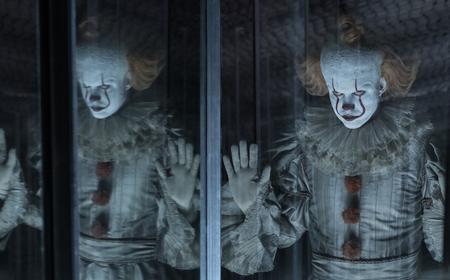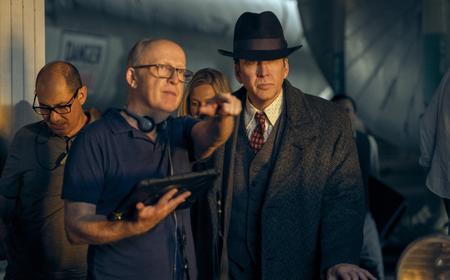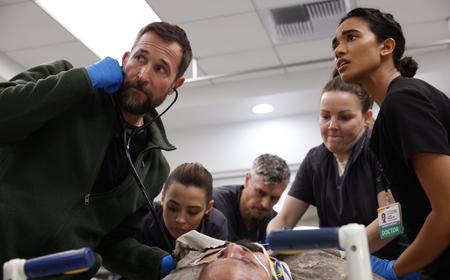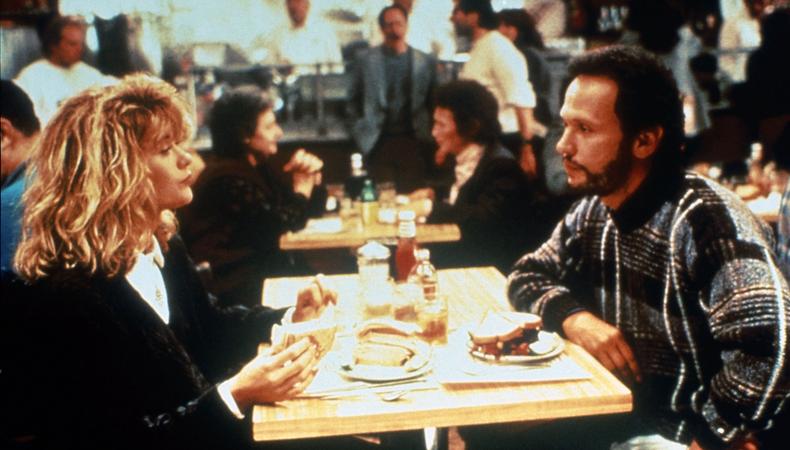
Think about the moment in “Hamlet” when the prince delivers “To be, or not to be,” the diner scene in “When Harry Met Sally” (1989), or the ear-cutting sequence in “Reservoir Dogs” (1992). What makes those moments unforgettable? A scene might seem simple on paper, but it’s the result of dozens of deliberate choices made by writers, directors, and actors. Even professionals sometimes struggle to articulate exactly what a scene is—let alone what makes one work. Read on to find out.
A scene is a single section of a play, TV show, or movie. While scenes vary in length, the beginning and end of a scene is usually marked by some sort of atmospheric change, like a new location or a jump in time. Scenes typically have their own arc—a beginning, middle, and end—and multiple scenes are strung together to create the arc of the larger work they make up. When reading a script or screenplay, scenes are easy to recognize: They are labeled clearly in the text. It can be a little more difficult, however, to recognize exactly where scenes start and finish when watching a play or film as an audience member.
Scenes are made up of several components—some of which show up on the page, and others that are added once the scene is put up on its feet onstage or on set.
Text elements: Some elements of a scene are part of the script or screenplay. These include:
- Characters: All scenes have at least one character—a person playing a specific role.
- Dialogue: Dialogue is everything characters say in a scene. Unless it is explicitly marked to ad-lib (or improvise), the expectation is that actors will deliver dialogue exactly as written.
- Setting: The setting describes where and when a scene takes place (e.g., a kitchen at midnight, or a school in Spain). While the setting is usually described in the script by the screenwriter or playwright, there is some leeway when it comes to artistic vision. Many directors choose to alter a play’s setting to make a creative point or shake up well-known material—hence the long tradition of Shakespeare productions inexplicably set in a 1980s high school or outer space.
- Stage directions: These notes describe what a character is doing in a given scene and can include blocking (“a character crosses stage left”) and actions (“a character picks up a glass”) in equal measure. While many directors adhere to these as written, it usually isn’t a requirement. Even if a director doesn’t use the stage directions verbatim, reading them can help clarify what the playwright envisioned and inform how that vision is honored.
- Parentheticals: Parentheticals are like stage directions for individual lines, appearing in parentheses before dialogue to tell the actor how to deliver the words (e.g., “relieved,” “carefully,” “laughing”). While it’s in an actor’s best interest to take parentheticals seriously (they’re there to help shape the arc of the scene, after all), there’s no need to feel caged in by them. There are many ways to portray relief, caution, and so on.
Artistic elements: Other elements of a scene are contributed by the directors, designers, and actors who bring it to life. These include:
- Design elements: Several design elements help establish both the setting and the overall tone of a scene. Sets anchor a time and place. Lighting can set a mood and draw attention to key moments. Costumes can signal the time period and reveal character details such as age, profession, and social status. Especially in film and television, scenes often incorporate music, further establishing mood and atmosphere.
- Blocking: Blocking encompasses everything actors do onstage or on set, including where they enter and exit, how they move, and any physical actions within the scene. As previously mentioned, sometimes the blocking a director chooses might align very closely with any stage directions that are included in the script; other times they may not. Regardless, it is important that the actors follow the blocking as set by the director, and not go “off-script” so to speak, unless they are explicitly encouraged to do so.
- Objectives and subtext: Beyond dialogue, all characters have wants and needs that they are working to fulfill. A director and actor will collaborate on discovering those objectives and ensuring the other artistic elements of the scene support them. This work usually happens during table work, a time early in the rehearsal process when the director and cast read through and analyze the script together, making sure everyone is on the same page.
- Acting choices: While a director may guide an actor toward a specific objective or interpretation, it is ultimately up to the actor to develop choices that support that vision. Actors draw on their full toolkit (often refined through years of class and scene study) to take the script from a two-dimensional document to a three-dimensional performance. Acting choices may feel like a small piece of the puzzle, but they can be the most pivotal: The decisions actors make can truly make or break a scene, or an entire piece.
Ready to crush your next scene? Check out our audition callboard here.