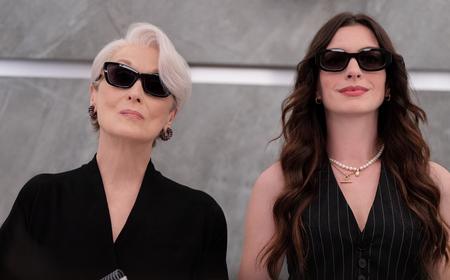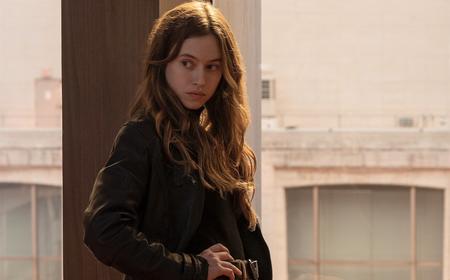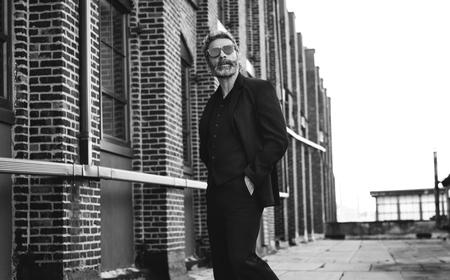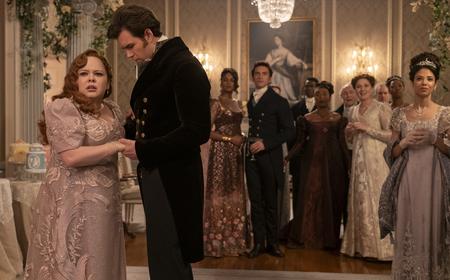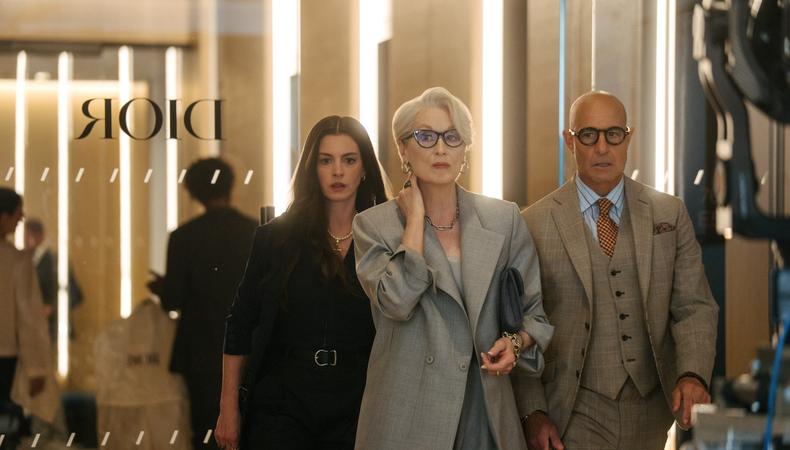
Gird your loins! In “The Devil Wears Prada 2,” out May 1, the fashion is back, and it’s just as devilishly fabulous as in the 2006 original.
The script and lighting might set the mood of a scene, but true alchemy happens in the fitting room. For an actor, the right wardrobe is the final bridge into the soul of their character—even one as famously guarded as Runway editor-in-chief Miranda Priestly. To uncover how the high-end aesthetic of “The Devil Wears Prada 2” evolved, we sat down with costume designer Molly Rogers (“Sex and the City,” “And Just Like That…”) to learn how she styled our favorite icons for their long-awaited return.
Rogers, who worked with costume designer and longtime friend Patricia Field on the first film, breaks down the pivotal moment Meryl Streep tried on the jacket that redefined Miranda’s current look. She also reveals how she honored Field’s work while pushing the sequel’s aesthetic into the modern world. From the shifts in style since the mid-2000s to major collaborations with fashion houses like Dior, Rogers shares with us how every find and carefully chosen accessory—like Andy Sachs’ (Anne Hathaway) Coach messenger bag—serves as a vital tool for character development.
When Meryl Streep stepped into these new silhouettes for the first time, was there a specific piece that signaled to her—and to you—that the character was officially back?
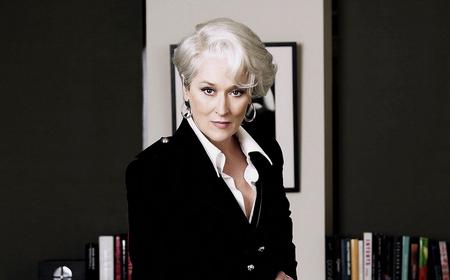
Definitely. We were in the fitting room, and we were trying on pencil skirts, because they really make you sit up straight—you know, you walk different in a pencil skirt. She wore a lot of them in the first movie. But they looked dated. I don’t know. We were scratching our heads, and I was getting a little nervous, like, Do I have it in the room? Do I have what I need in this room?
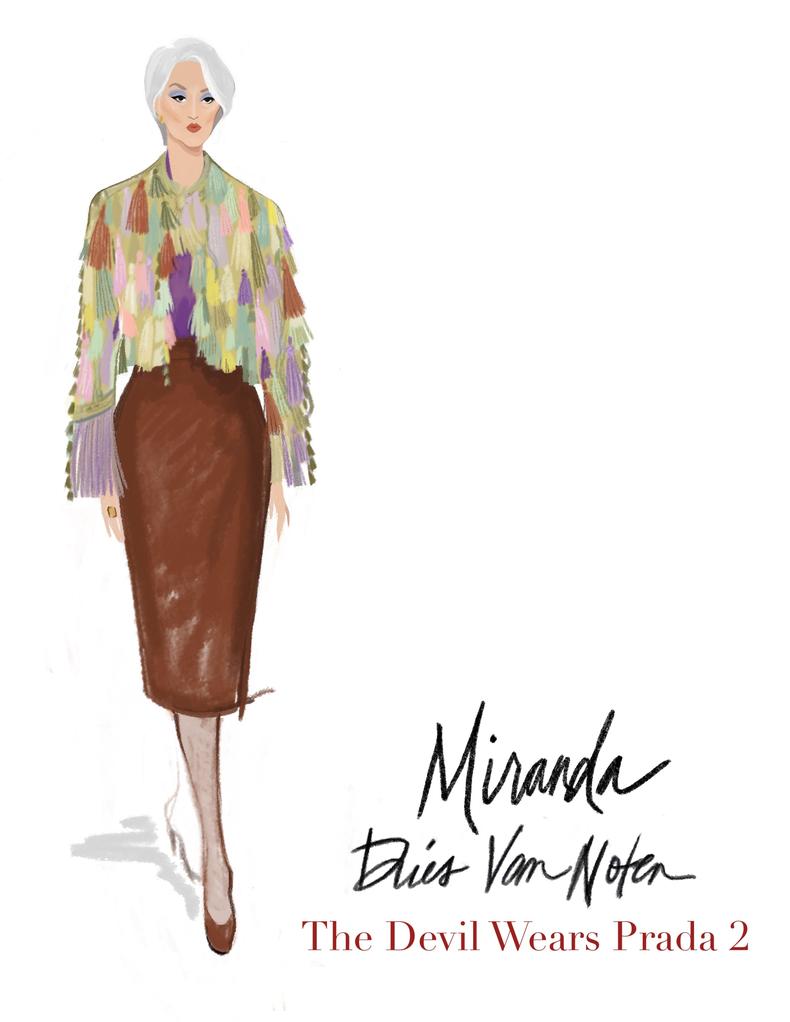
We just kept playing and trying stuff on. You know, no pressure. Let’s just see. “What does that blouse look like on?” Or, “That color doesn’t work on me with this white wig.” We just went on a discovery. There was one jacket in the room, and [Streep] put it on, and I noticed she walked toward the mirror to see herself in it and she walked different. She turned, and she was like, “I love the sleeve. I love the collar of the lapel of this jacket. I love the shoulder. The fabric is exquisite.” And I said, “Are you seeing what I’m seeing?” And she was like, “Yes, we found it! Let’s eat lunch.” We knew. Immediately, her posture, everything… I saw her. She saw it.
I want to say, she gave me so much time. She was so generous with her fitting time and kept coming back again and again. Of course, she changes clothes a lot. But, you know, you need the luxury of marinating and sleeping on stuff and saying, “I think that skirt was a little too long. I gotta put it back on her.” I’m not a genius. I need second cracks at stuff.
Credit: Walt Disney Studios
For the first film, you worked with the legendary Patricia Field, who is also your longtime mentor.
And my dear, dear friend. She does not like it when I don’t describe her as my best friend.
You’ve mentioned trying to follow Pat’s DNA while designing the sequel. What’s the one piece in the sequel that feels the most like a Patricia Field original?
I don’t try to recreate Pat’s style. You know, I can’t. She’s her. She’s had her life experiences, and I am certainly inspired by different things. I like different music, and I have my own references that are important to me. But as far as the road map and DNA of those characters, she established this editrix, and this fish out of water, and this snarky, witty, smart, British assistant, and it was just easy to transport myself [back].
I have to ask Pat this. For me, the bookend-to-bookend jackets in the first and second movies are my tassel jacket [in “The Devil Wears Prada 2”] and Pat’s coin jacket that Meryl wears in the soliloquy of the cerulean sweater. I think those are both ornate and editrix, and they have a connection for me. I gotta ask Pat, “Would you have pulled that for Miranda Priestly?”
The first film came out 20 years ago, and fashion has moved quite a bit from the 2000s glamour to today’s “quiet luxury.” How did you grow Miranda Priestly’s style considering the shift in trends?
Well, Pat certainly taught me to pay no mind to trends. Don’t follow them. I always laugh when I see an article in a fashion magazine about “The wide-leg jean is back!” Yeah, if you’re eight feet tall, wide-leg jeans look amazing on you! The rest of us? No.
You march to your own drum, and I just think the way in which we shop and procure our clothing is so vastly different. [For the first movie] Pat and I made appointments at showrooms. We went to see Christian Lacroix in New York at the showroom on Madison Avenue. We went into brick-and-mortar, and we would spend from opening at 7:45 a.m. until closing at Century 21 [department store]. I mean, tactile people we are, and I definitely have to touch vintage. So I think the way in which we procure our things influences a great deal of how Miranda moves in her world. It’s faster. She needs to have a clean silhouette to burn through this world, because it’s just moving super fast; you’re going to be replaced by a robot.
Credit: Walt Disney Studios
It’s known that designers were a bit hesitant to participate in the first movie, but now almost everyone wanted to be in the sequel. Which designer is the new front-runner for the Runway magazine look?
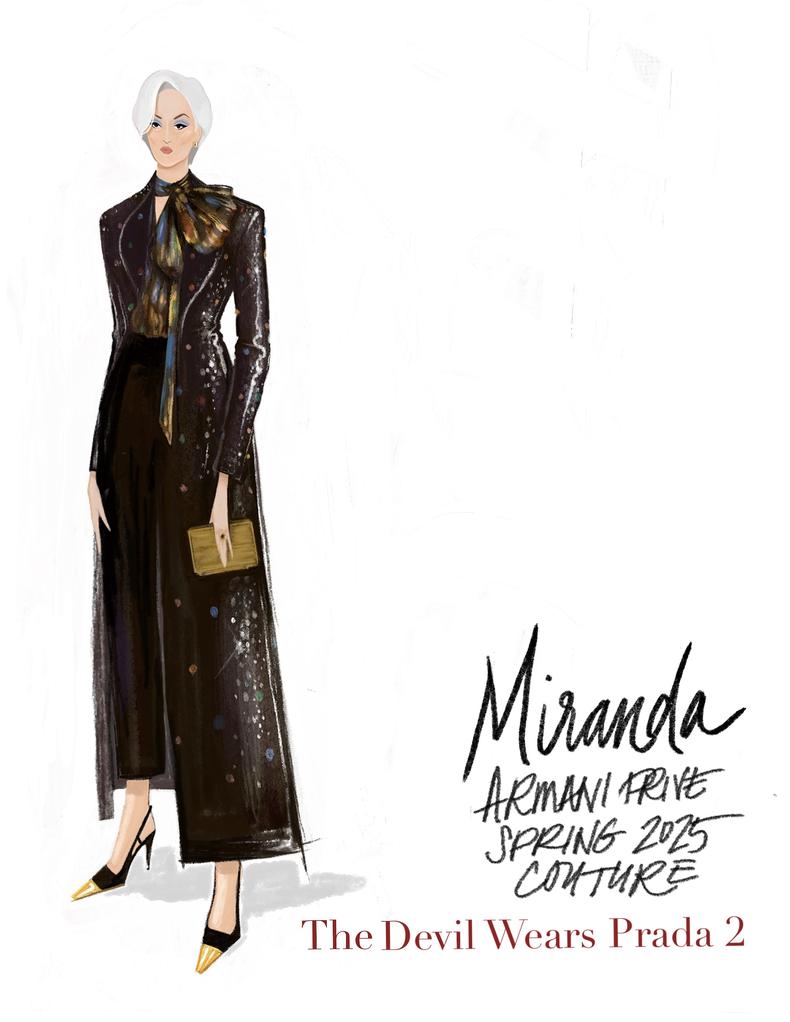
Well, Dior had a very big footprint in the [sequel], and that was a really fun collaboration. I think that was very significant in the movie. But in the first movie, there were three designers that really were like, “Get out of my office. I’m not going to help you.” And Pat said to me, “There are so many clothes in the world; it won’t matter.” And that was true. She wasn’t concerned about it. And in that case, on the first movie, you had Mr. Valentino, who came to Meryl and said, “I’m here for you, whatever you need.” And that was the Italian way. People wanted to help.
And on this one—it’s such a beloved first movie and has cult-like status, and everybody wanted their brand or product in it. But it was really important to edit. I don’t look at the movie—and I’ve only seen it once—and feel it’s a commercial. It’s not, and it could have been. Things just kind of come by your eye, and you’re titillated by seeing a glittery jacket at night. I think it was about editing it and being really careful, because there was just so much to choose from. And I wanted it to hold up. And I hope it does hold up to the test of time, because Pat’s crack at it sure did.
In the sequel, we see Anne Hathaway’s Andy in more “workwear chic” moments. How does her new style reflect her character growth?
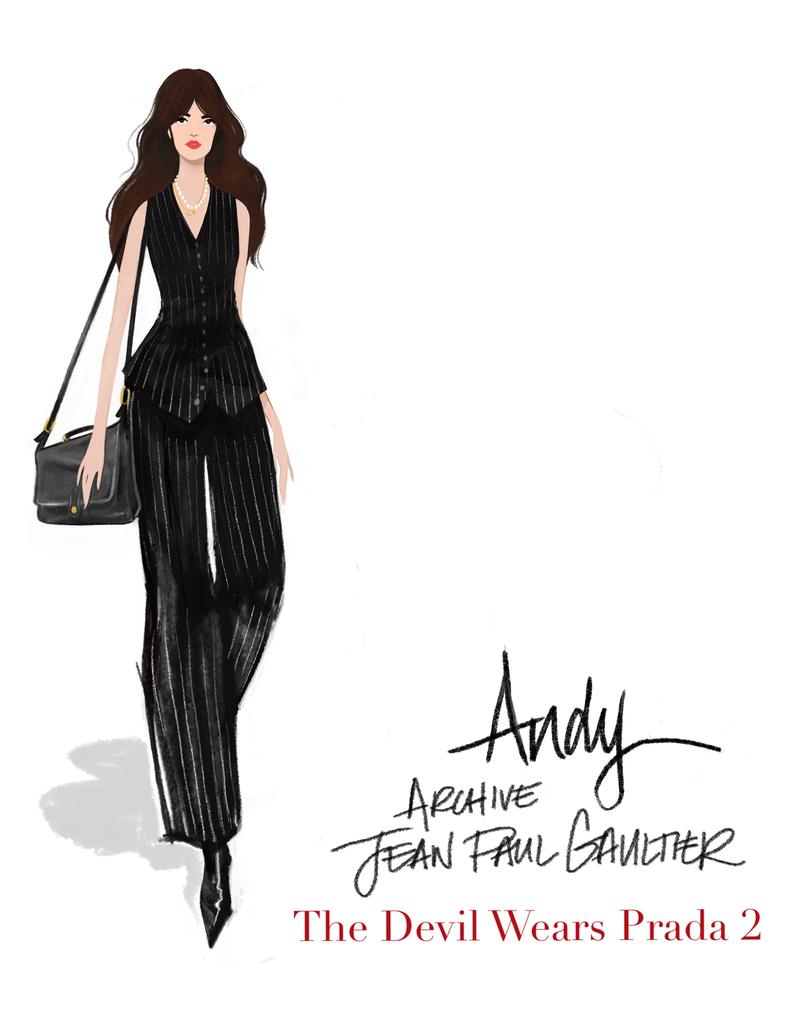
Annie and I had many conversations in the beginning, when we had time to debate, think, and meditate. One of her prerequisites, or requirements for Andrea Sachs, is that Andrea has traveled a lot in her profession as a reporter. So, you know, the eye has traveled. You pick things up as you go along in the world. She really wanted that reflected in her wardrobe, where vintage was going to be important. Or she was on assignment, let’s say, for some newspaper, and she ran into some store and got a memento from there. It was important to [have those] items in her costumes.
Credit: Walt Disney Studios
What about Emily Blunt’s character? What style choices did you use to show her new executive role?
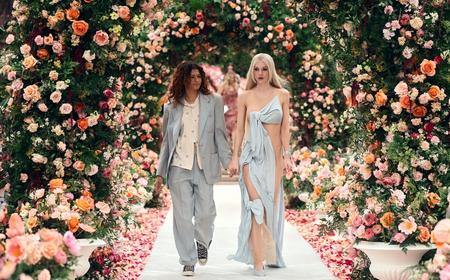
She works for the House of Dior, and Dior was such a wonderful partner. You know, I certainly didn’t want—and she didn’t want—her to be in head-to-toe Dior. I think that’s overkill, and it could flatten that costume out. So Dior gave us permission to mix and match everything, which was important to us. Her character always had edgier fashion choices. In the first movie, she was in Vivienne Westwood, Rick Owens, and Margiela. That I carried through [in the sequel]. I really tried to get her in a corset or a belt slung across her shoulder as a strap. She is riskier or edgier, and all the shoppers fought over shopping for her because they got to go crazy. They could go explore and bring back something to show her.
You’ve mentioned that some things, like the thigh-high Chanel boots, need to stay sacred. Were there any other specific archive pieces you considered bringing back?
It was a must to get our hands on the cerulean sweater. There’s just no way around it. When I read the script, and I closed it, I was like, “Must. Get. Sweater. Must. Get. Sweater.”
It returns!
In a good spot.
What is one small costume detail in the sequel that audiences might not notice at first but is critical to telling a character’s story?
I thought that Annie’s Coach messenger bag was really important for a reporter to have. Props brought us, like, three or four to choose from, and the great thing about the one we chose, when she put it on her shoulder, it looked like she owned it. It was no longer a prop.
Do you have a favorite look in the sequel?
I do. It didn’t make it in.
Oh no. Do you want to mention it?
No, because, I mean, I think people will eventually find out what it is. I know it’s not in the movie for a reason, because our director [David Frankel] is smart, and he knows what he’s doing. I told him, “You broke my heart. But I get it. I get it.”
This interview has been edited for clarity and length.