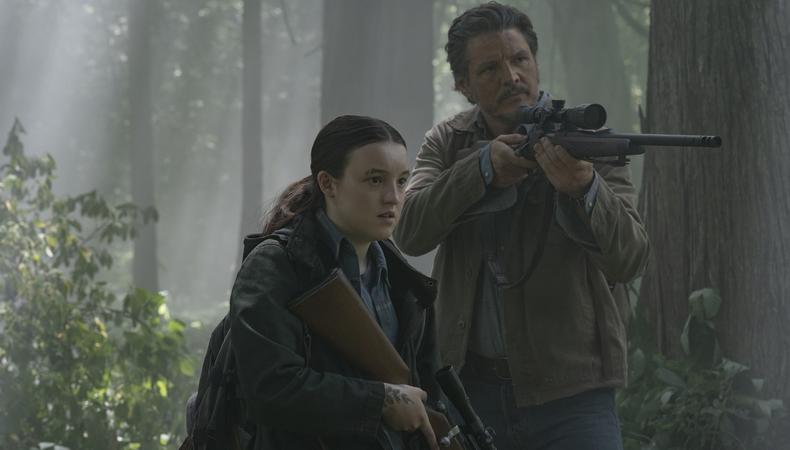
The long-awaited second season of Craig Mazin and Neil Druckmann’s post-apocalyptic drama “The Last of Us” is as hypnotizingly stressful as ever. But if you have a moment between wiping your tears and hiding your eyes, you might start to realize there’s a lot for actors to learn from this month’s Sunday night appointment television… no cordyceps required.
Major spoilers ahead for both seasons of “The Last of Us.”
Handling the expectations of an adaptation
One of the most unique features of “The Last of Us” is its source material, the 2013 video game of the same name and its 2020 sequel. While the show’s actors are given plenty of new material, they’re also tasked with bringing scripted cutscenes to life—often with very few script or blocking changes. This can be tricky, since actors must put their own three-dimensional spin on scenes while still staying true to the preconceived notions of the game’s fans.
On the other hand, this can give actors a leg up over those starring in original works, since adaptations provide the opportunity to understand a character’s entire arc right off the bat. Actors in these projects can essentially work backwards, adding emotional motivations to pre-existing actions and filling in the connective tissue between original scenes. Striking that balance can be difficult, so take note: Even if it isn’t exactly a video-game-to-prestige-TV adaptation, performing in any remake comes with similar opportunities and pitfalls.
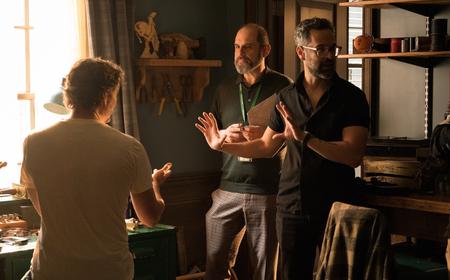 Craig Mazin on His Fan-First Approach to ‘The Last of Us’
Carefully depicting utter devastation
The second episode of Season 2 features the brutal killing of patriarch Joel (Pedro Pascal). It’s an incredibly hard watch, as he’s bludgeoned to death with a golf club by a vengeful Abby (Kaitlyn Dever) in front of his own pseudo-daughter Ellie (Bella Ramsey). But as difficult as it is for the audience at home to watch, it was an equally tense day on set that required actors to grapple with their own emotions.
“I almost went too far and made it too normal and pretended it wasn’t happening right up until the moment where it did happen,” Ramsey told the Hollywood Reporter of the scene. “That’s how I approach scenes like that. If I think about it too much, then I’ve got too much anxiety and stress about it.”
 How to Make Yourself Cry on Command
Conversely, Dever’s experience was extremely personal; not only was this the first scene she shot as her character, but it was filmed just a few days after her own mother’s funeral. In an interview with Entertainment Weekly, she recalled, “Because of my life circumstances, I wasn’t actually able to do my normal routine as an actor, which was really interesting because I was kind of worried about it. Usually if I have a monologue like that, I’m memorizing it three weeks before I do it. I had a different approach, and I think that it really served the character in a lot of ways. I was able to sort of… I don’t know, just really let it go and not think about it too much because the words on the page are so powerful anyway.”
A quick scroll through social media from that night will tell you that the scene was all too successful in moving the audience—but rest assured, there’s no one way to approach a devastating scene, whether that means keeping your feelings at arm’s length or leaning into them.
The subtle art of subtle growth
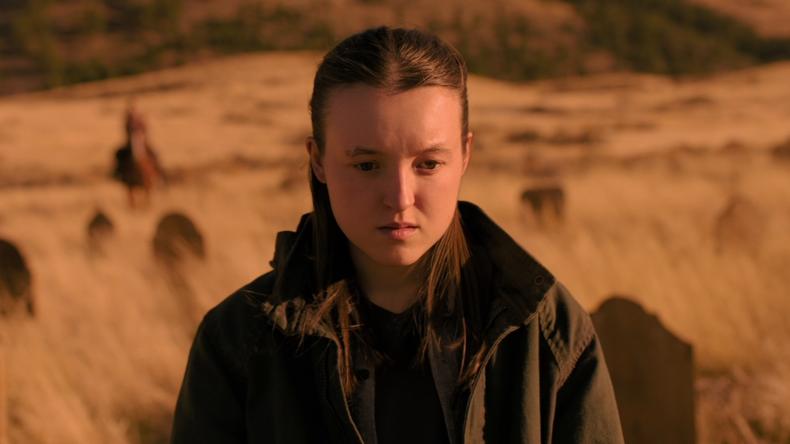
Although only two years passed between the releases of Seasons 1 and 2, the second season begins five years after the events of the first. A five-year time jump will age any character, but it is especially evident for the adolescent Ellie, since the maturation between 14 and 19 years old is drastic (even without being raised in a post-apocalyptic society!).
Ramsey handles their character’s growth masterfully, staying true to the plucky Ellie that we came to know and love in the first season but adding a level of hardness and maturity stemming from the trauma she’s endured. If that weren’t tricky enough, things turn up a notch in episode 6, which depicts several of Ellie’s birthdays between seasons, meaning Ramsey had to play her at three different ages in the span of one episode. The changes are subtle, but actors should take note of the ways that Ramsey makes slight adjustments to their posturing, body language, and general goofiness (or lack thereof) as the birthdays march by.
True, your character’s arc is something you can prep and plan for. But for Ramsey, it all comes from stepping in their shoes. “There’s only so much that I can feel about a character by intellectualizing them,” they told Backstage. “I have to be them. And the only time I’m ever going to fully be them is when I’m in costume, in makeup, on set, the camera is rolling, and someone says action.”
The importance of grounded comedic relief
Seeing a comedic legend like Catherine O’Hara in a post-apocalyptic drama may have come as a surprise for some viewers, but she’s a welcome addition to the cast. Comedic relief is necessary on a show like this, which would otherwise be so stressful that viewing might become a slog.
In the show’s first season, that relief often came from snarky Ellie and her pun book (thankfully still present in the second season)—but this season ups the ante by introducing O’Hara’s character, Gail, a therapist with a not-so-subtle drug problem. O’Hara is legitimately funny while still showing that her character belongs in the bleak, gloomy world of “The Last of Us.” This is a reminder to comedic actors to never box themselves in: O’Hara takes the opportunity to show her entire range, balancing signature one-liners (“Is there a ‘Doctor is in’ sign on me like Lucy from fucking ‘Peanuts?’ ”) with real dramatic gravitas. When Gail learns about her husband’s death, for instance, O’Hara’s portrayal is nothing short of heart-wrenching.