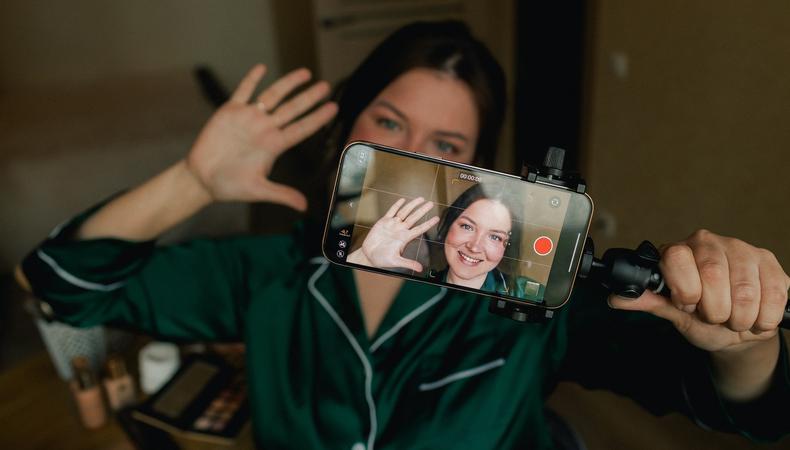
From Glossier to HelloFresh (and every social media-savvy brand in between), companies across industries are leaning heavily on user-generated content (UGC). The growing demand for this type of content has created a new career path in the marketing industry: the UGC creator. If you’re looking to break into paid UGC, here’s a practical guide.
1. Build a UGC portfolio.
UGC is all about performance, and brands looking for content creators need proof that you can deliver. According to Billo, 93% of marketers say UGC outperforms traditional branded content. As more creators enter the space and brands become increasingly selective, a strong UGC portfolio is no longer optional—it’s the primary way brands assess whether you are credible and can deliver results.
Rather than functioning as a simple gallery of videos, an effective UGC portfolio should reduce friction for brands and UGC reviewers, clearly communicate your value, and showcase key performance indicators of your content. UGC creator and expert Baotran Tran emphasizes that portfolios should be built with “brand reviewers in mind, not just aesthetics.”
Tran lists some key portfolio tips to keep in mind:
- Show results upfront. Screenshots of performance metrics on your landing page, such as views, likes, shares, and click-throughs, help brands quickly understand how your content resonates and your sense of impact.
- Highlight successful case studies. Instead of overwhelming UGC reviewers with dozens of unorganized videos, focus on a curation of a few strong client examples where your content drove engagement or conversions, and briefly describe the context. Showing how your content performed for past clients gives brands tangible proof of impact.
- Add accordion-style dropdown sections. This allows you to showcase your range without overwhelming reviewers. Tran suggests using expandable sections to showcase UGC examples, your influencer media kit, creative strategy capabilities, and alternate creator options.
- Make it scannable. Brands often review portfolios quickly, so everything from contact information to relevant examples to social links should be easy to find within seconds.
2. Create sample content.
If you want to create UGC for a brand you already use, try making content with products you already own. This allows brands to immediately see what you’re capable of creatively, while also signaling that you’re a self-starter they won’t have to micro-manage to get quality UGC.
Create a variety of sample videos such as product reviews, testimonials, and lifestyle integrations. These examples give brands insight into your on-camera presence, storytelling ability, and visual style, while also allowing them to see how your UGC performs organically online.
Beyond the format itself, brands pay close attention to aesthetic world-building inside your visuals. Tran speaks on how to create UGC that stands out to brands, saying “visuals that are satisfying to watch, feel natural, and invoke positive emotions about their product are going to stand out much more than content that feels unnaturally staged, too polished, or overexaggerated.”
With these tips in mind, creating sample content may look like filming the first bites of a new snack in your kitchen or a GRWM video using your favorite skincare product within your morning routine. Your activity as a consumer can be used to kickstart your UGC portfolio; there’s no need to wait for paid gigs to get started.
3. Show off your hook-creating abilities.
With short-form content, the first few seconds determine whether someone keeps watching or scrolls past, which is why brands often prioritize creators who can deliver multiple hook variations rather than a single polished clip.
Variation in hook writing may involve tone switching, prompting, or shifting focus. For example, consider two different hooks for the same blender. One focuses on functionality: “I filmed my morning smoothie using the XYZ blender to show how easy it is to clean.” Another might lean on health benefits and research to appeal to a different audience: “Studies show that blending your breakfast can boost nutrient absorption—here’s how the XYZ blender makes it effortless.”
Strong visuals like good lighting and thoughtful framing make the content feel native to the platforms where UGC performs best. Brands also look for creators who understand context: using products in places where they’d naturally appear makes a huge difference. Beauty or makeup products shot in a bathroom, food items filmed in a kitchen, or wellness products shown in a real morning routine all feel more authentic and less staged than a generic backdrop.
Details matter, too. Close-ups and texture shots help bring products to life, giving viewers a tactile sense of how something looks or works. Beauty product demos of makeup being applied on skin, food sizzling in a pan from a meal prep package, or unboxing ASMR of a new camera in a naturally lit studio all help content feel intentional and interesting through context without appearing overproduced. Watch this mic unboxing clip to see what we mean:
@willlforbes Sound quality gonna be cleannn ???? #dji #djimicmini #unboxing #techtok #willlforbes ♬ original sound - Will
4. Build for discoverability.
While cold pitching can help get your foot in the door of some brands, it’s rarely the most effective long-term strategy on its own. As Tran puts it, “One thing I wish I knew about getting UGC jobs when I started was that sending out 100, 500, 1,000 cold email pitches to brands wasn’t going to be the most efficient use of my time. It’s good to get your name in front of some brands, but it requires much more manual upfront work and isn’t the most effective way to get more paid brand deals.”
Instead, UGC success increasingly depends on discoverability, not volume outreach. Use cold pitching, but don’t lean entirely on it for landing UGC opportunities. Creator agencies like Billo and Insense often discover creators using relevant hashtags or trending audio, so prioritize building a personal brand that attracts brands organically. Consistent posting makes you searchable, familiar, and trusted before a brand ever opens an inbox.
That said, discoverability doesn’t mean boxing yourself in. Tran cautions against building an account that’s overly UGC-centric: “Everyone seems to think the only way to build a personal brand as a UGC creator is to post only about UGC and make everything on the page UGC-centric. Over time, we’ve seen that creators who have more lifestyle ‘influencer-like’ personal brands not only grow faster but also get more inbounds.”
A simple way to build your discoverability on TikTok and Instagram is to post a few lifestyle content pieces a week within your interests with subtle brand mentions and a caption that includes #UGCExample.
5. Communicate effectively with brands.
Whether an opportunity presents itself through an inbound or outbound lead, how you communicate with a brand is just as important as your creative abilities.
Tran emphasizes that brands consistently value “timely communication and content delivery (anything within three days is ideal).” Responsiveness and clarity signal professionalism and reliability. The goal is not only to get one UGC opportunity but also a potential repeating client or a brand deal.
Brands also appreciate creators who go beyond simply following instructions. Providing enthusiastic content suggestions, complete with linked video references, allows the brand to visualize the final product before it’s even created. This not only demonstrates initiative but also helps reduce revisions and ensures your alignment with the brand’s goals.